
Why your cat loves the box more than the toy inside
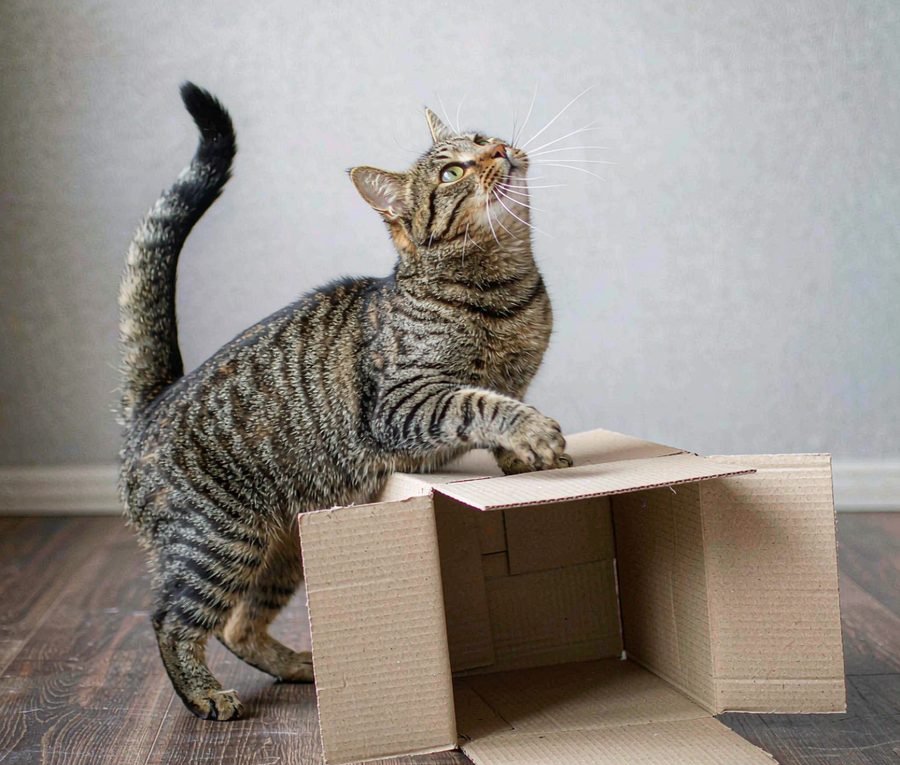
Every cat owner has funded this experiment. The new toy arrives. The cat sniffs the toy, walks away, and is found sitting in the packaging like it just won a throne.
This is not ingratitude. It is physics, or close to it.
What the box offers
A box is a hiding place with one door. Cats are ambush predators with the anxiety settings of prey animals, which is a strange combination that the box solves perfectly: the cat can watch the world while the world cannot watch the cat's back.
Security is the first answer. The second is temperature. Cardboard is a decent insulator, and cats spend most of the day inside their thermal comfort zone, which runs hotter than ours. A box in a sunny spot is a heated den with a view.
The third answer is stress. In a study on shelter cats, cats given a box adapted to a new environment measurably faster than cats without one. The box is not entertainment. It is anxiety management.
The fake-box finding
The strangest part: cats also sit in the outline of a box. In a study where boxes were just tape squares on the floor, cats stepped in and settled anyway. An illusion of a boundary was enough. That tells you how deep the enclosed-space preference runs. It is not about the cardboard. It is about the edges.
What to do with this knowledge
Keep one box in circulation, rotated when it gets flattened. Put a soft pad in it. And if you are shopping for cat furniture, buy the principle, not the product: whatever you choose should offer enclosure and a clear vantage, or it will lose to the Amazon box forever.
That finding runs through our whole cat line. Enclosed beds outsell open mats in every market we ship to, and the design brief for our covered beds started with an actual shipping box in the sample room that three cats refused to give back. We are not embarrassed about it. We hired the box as a consultant, and it was excellent.