
A quiet home is a happy home
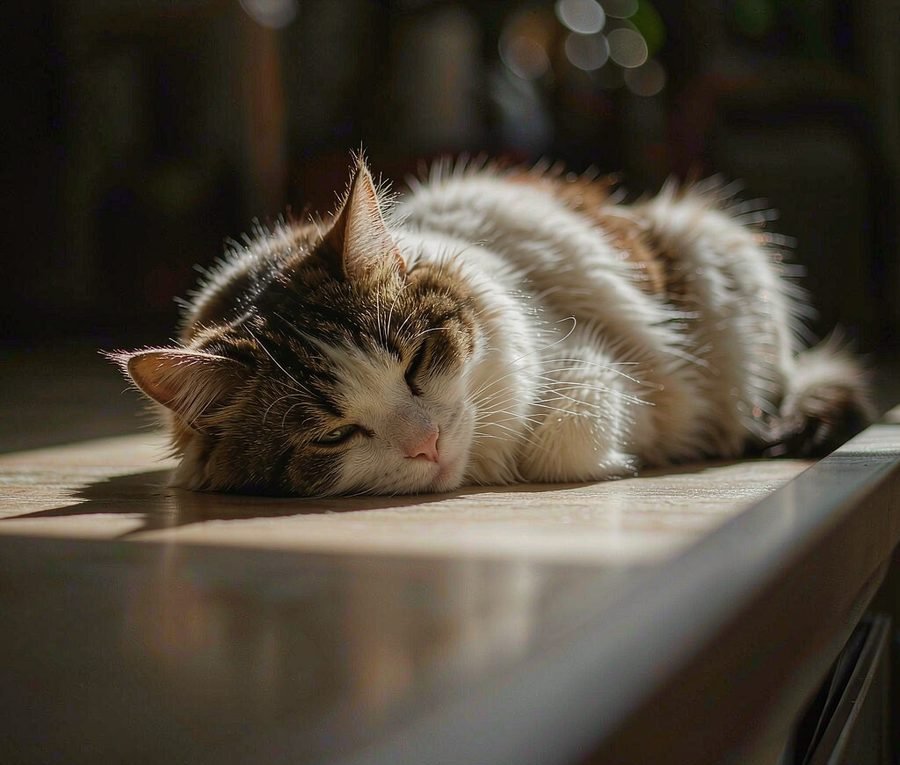
People are usually surprised to learn that a cat's hearing runs roughly two octaves above ours. That vacuum you hate is worse for the cat. The TV you fell asleep to, the speaker on the fridge, the blender, the door slam. All of it arrives louder, and some of it arrives in ranges we simply cannot perceive.
What noise does to a cat
Cats rarely show fear the way dogs do. What they show is avoidance. A cat living with constant background noise does not necessarily hide all day. It picks worse real estate: behind the sofa instead of the windowsill, under the bed instead of the middle of the room. Over time, a noisy home quietly shrinks a cat's map of it.
Loud sudden noise is worse than steady noise, and unpredictability is the worst of all. A cat can adapt to a city street outside the window. It never fully adapts to random explosions from the kitchen appliance.
The cheap fixes
Give the cat one genuinely quiet room, or at least one quiet zone with covered escape routes. Put the litter box far from the laundry machines; imagine doing your business next to a jet engine. Run the loud appliances when the cat is out of the room or has somewhere high and enclosed to go. Rug and curtains do more than people expect; hard floors bounce sound around a room like a squash court.
Watch where the cat chooses to sleep. That spot is data about your home's acoustics from the resident expert.
This sensitivity shaped more of our product line than almost anything else. The quietest wheel on our cat tree samples, the felt pads under every platform, the decision to skip bells on most toys, all trace back to watching cats avoid the loud versions. A quiet product is a used product. The louder alternative ends up in a closet, and the cat ends up in the box it shipped in, which is at least silent.